
Drain Tile System Basement Guide: What It Is and How It Protects Your Home
Most homeowners do not think about basement drainage until water shows up where it should not. Maybe there is a damp spot near the wall or a puddle after heavy rain. Maybe the basement smells musty, the carpet feels damp, or water keeps appearing where the wall meets the floor.
That is usually when homeowners start looking into a drain tile system basement solution.
A basement drain tile system is designed to collect water around or beneath your foundation and move it away before it can cause basement flooding, moisture problems, mold, or structural concerns. Despite the name, modern drain tile is usually not made of tile at all. It is typically a perforated drainage pipe installed in stone or gravel, providing a controlled path for water away from the foundation.
Drain tile can be installed inside or outside the foundation depending on where the water problem is coming from and what kind of repair makes the most sense. A professional inspection can help determine whether the home needs interior drain tile, exterior drain tile, foundation crack repair, sump pump support, grading improvements, or another waterproofing solution.
Key Takeaways
- A basement drain tile system collects water and redirects it away from the foundation before it can build pressure or enter the basement.
- Interior drain tile is often used to manage water that reaches the inside perimeter of the basement, especially near the cove joint where the wall meets the floor.
- Exterior drain tile is installed outside the foundation and is designed to intercept water before it reaches the basement wall.
- The difference between drain tile vs French drain usually comes down to location, purpose, and how the system is installed.
- Drain tile installation should be based on the specific source of water intrusion, not just the fact that the basement is wet.
- A drain tile system works best when paired with the right sump pump, discharge line, grading, gutters, downspouts, and foundation repair strategy.
What Is Drain Tile?
So, what is drain tile? In simple terms, drain tile is a drainage system that collects groundwater around or beneath the foundation and redirects it away from the basement.
The term “drain tile” comes from older systems that used sections of clay tile to move water. Today, most systems use perforated drainage pipe instead. Water enters the pipe through small openings, then moves through the system toward a sump basin, sump pump, or other drainage outlet.
Drain tile is usually surrounded by gravel or stone. This helps water move freely into the system instead of collecting in the soil around the foundation. The goal is to give water an easier path to follow so it does not build pressure against basement walls or push into the home.
It is important to know that drain tile does not “waterproof” the basement wall by itself. It manages water. That is why a drain tile system basement solution is often part of a larger basement waterproofing plan that may also include a sump pump, discharge line, foundation repair, grading, gutters, or downspout improvements.
Interior Drain Tile
Interior drain tile is installed inside the basement along the foundation perimeter. It collects water after it reaches the inside edge of the foundation and directs it toward a sump basin, where the sump pump can move it away from the home.
Interior drain tile is often used when water enters near the cove joint, which is the area where the basement wall meets the floor. It may also make sense when exterior excavation is not practical because of landscaping, patios, driveways, decks, neighboring structures, or limited access.
The main thing to understand is that interior drain tile manages water after it reaches the inside drainage area. It does not stop water outside the foundation wall. Instead, it gives that water a controlled path before it can spread across the basement floor.
Exterior Drain Tile
Exterior drain tile is installed outside the foundation, usually near the footing. Its job is to collect water before it has a chance to push against the basement wall.
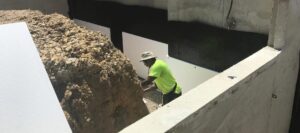
Exterior drain tile typically requires excavation around the foundation. The soil is removed, the foundation wall is exposed, and drainage pipe is installed near the bottom of the wall. Because the foundation wall is exposed during the process, exterior drain tile may be paired with exterior waterproofing membranes, wall repair, gravel backfill, grading improvements, or downspout corrections.
Exterior installation is usually more invasive than interior drain tile, but it may make sense when the outside foundation wall also needs waterproofing or repair.
How a Drain Tile System Basement Solution Protects Your Home
A drain tile system basement solution protects the home by collecting water, relieving pressure around the foundation, and moving water to a controlled discharge point.
As one may expect, water naturally collects around a foundation during heavy rain, spring snowmelt, or periods of saturated soil. When that water has nowhere to go, it can create hydrostatic pressure against the foundation. That pressure can push water through cracks, porous concrete, gaps around penetrations, weak points in the wall, or the cove joint where the basement wall meets the floor.
Drain tile gives this water a path of less resistance. Instead of pushing into the basement, the water can move into the drainage system. Many systems direct that water toward a sump basin, where the sump pump moves it away from the home.
A properly designed drain tile system can help reduce basement flooding, damp floors, musty odors, mold risk, and water damage. The system only works properly, though, when the drain tile, sump pump, discharge line, and surrounding waterproofing components are designed and installed correctly.
Common Signs You May Need Basement Drain Tile
You may need a basement drain tile system if water repeatedly enters the basement, collects near the floor, or appears during heavy rain, snowmelt, or wet soil conditions.
Common signs you may need drain tile include:
- Water along the basement perimeter
- Puddles near the wall
- Damp carpet or flooring
- Musty odors
- White mineral deposits on concrete
- Water entering where the basement wall meets the floor
- Peeling paint or damp drywall
- Mold or mildew smells
- High basement humidity
- Recurring water after heavy rain or snowmelt
Foundation cracks should also be taken seriously. Drain tile may help manage groundwater, but cracks may need to be repaired separately. A wet basement does not automatically mean one specific fix. The issue may involve drain tile, a sump pump, foundation cracks, grading, gutters, downspouts, or a combination of waterproofing solutions.
Drain Tile vs. French Drain: What’s the Difference?
The difference between drain tile vs French drain usually comes down to where the system is installed and what water problem it is designed to solve.
A French drain is typically a gravel-filled trench with a perforated pipe that redirects surface water or groundwater. French drains are often used for yard drainage, low spots in landscaping, or areas where water collects outside the home.
Drain tile is often discussed in the context of foundation waterproofing. It is commonly installed around foundations or beneath basement slabs to manage water near the home’s footing. If you are considering a drain tile system basement solution, the key question is where the water is coming from, where it needs to go, and how the system will move it away from the home.
The terms can get confusing because they are sometimes used loosely or interchangeably. An exterior drain tile system near the footing can function similarly to a type of French drain. Both systems use pipe and stone to collect and redirect water.
What Happens During Drain Tile Installation?
Drain tile installation typically involves identifying the source of water intrusion, preparing the drainage path, installing perforated pipe and stone, and connecting the system to a sump pump or outlet.
The process should start with an inspection. Before recommending drain tile, a professional should look at the basement, foundation, grading, sump pump, gutters, downspouts, and existing drainage conditions. The goal is to understand why water is entering the basement, not just where it appears inside.
For interior drain tile, installation may involve opening the basement floor around the perimeter. A trench is created near the foundation wall, perforated pipe is installed in stone, and the system is directed toward a sump basin. Once the system is in place, the floor is restored.
For exterior drain tile, installation may involve excavation around the outside of the foundation. The foundation wall is exposed, drainage pipe is installed near the footing, stone is added, and waterproofing materials may be applied when needed. The area is then backfilled.
No matter which type of system is installed, the discharge path matters. Collected water needs to move away from the home. If water is discharged too close to the foundation, it can end up right back where it started, which is a very annoying way for a drainage system to make a full circle.
The sump pump and backup system should also be evaluated if the drain tile directs water to a sump basin. Drain tile can collect the water, but the sump pump still has to move it out.
How Much Does a Drain Tile System Cost?
The cost of a basement drain tile system depends on the type of system, length of installation, access, foundation conditions, sump pump needs, and related waterproofing repairs.
Interior drain tile and exterior drain tile can differ significantly in cost because the installation process is different. Interior drain tile may involve cutting and restoring basement flooring along the perimeter. Exterior drain tile may involve excavation, landscaping repair, hardscape removal, or exterior waterproofing materials.
Common cost factors include:
- Basement size
- Linear footage of drain tile
- Interior or exterior installation
- Excavation needs
- Concrete removal and restoration
- Sump pump connection
- Discharge routing
- Foundation condition
- Crack repair needs
- Sump pump replacement or backup system
- Grading, gutter, or downspout improvements
It is best not to think of drain tile as a flat, one-size-fits-all price. A small interior drainage project is different from a full exterior excavation project. The investment should be viewed in terms of long-term basement protection and prevention of more expensive water damage.
So, Do You Need a Drain Tile System in Your Basement?
You may need a drain tile system basement solution if water keeps entering your basement, collecting near the foundation, or returning after heavy rain or snowmelt.
Start with where the water is coming from. Occasional dampness may have a different cause than recurring perimeter flooding. Water at the cove joint, repeated basement puddles, musty odors, and a sump pump that seems overwhelmed can all point to a drainage issue.
The right solution may include interior drain tile, exterior drain tile, foundation crack repair, sump pump upgrades, grading improvements, gutter corrections, downspout extensions, or another waterproofing repair. The best answer depends on the home, the foundation, and the water source.
If you are seeing signs of basement water intrusion, do not wait for the next storm to test the system. Zander Solutions can inspect your basement, identify the source of the problem, and recommend the right waterproofing plan to help keep water away from your home.